Plainfield Epoxy Flooring installs flake epoxy floor systems throughout Plainfield, IL, with 20+ years of coating work on garages, basements and commercial spaces, and we install flake floors in surrounding cities including Shorewood, Minooka, North Aurora, Warrenville and Lemont. A flake floor is built by broadcasting colored vinyl chips into a wet epoxy base, then locking them under a clear topcoat, producing a textured, speckled finish that hides wear and stands up to daily use.
It is the finish most homeowners choose for a garage, and for good reason. The texture and mix of colors hide dust, tire marks and small chips, while the layered system builds real thickness over the slab, but only when the concrete underneath has been prepared and tested properly.
Every flake floor we install starts with diamond grinding, crack repair and a moisture test, never acid etching. The proposal names the base coat, the flake blend and coverage, the topcoat and the finished thickness, so you can compare what was quoted with what was installed.
Flake Blends, Chip Sizes and Coverage
Choosing a Flake Blend
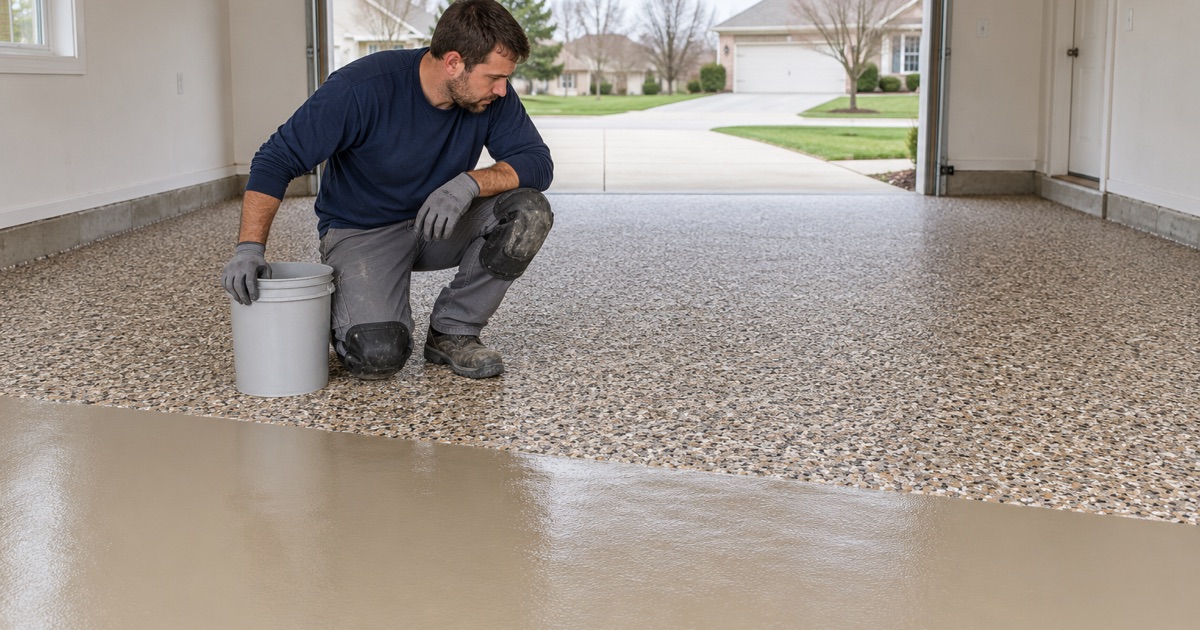
Flake blends combine several colors of vinyl chips, usually in grays, tans, blacks and whites, with accent colors available. Lighter blends make a garage brighter and show more dust, while darker or mid-tone blends hide dirt and tire marks better, and we bring sample boards so you can see blends on your own floor and lighting.
The base coat color under the chips also affects the result, especially with partial coverage. We usually match the base to one of the dominant colors in the blend, so any gaps between chips blend in rather than standing out.
Chip Size and Pattern
Chip sizes range from small flecks to larger chips. Smaller chips create a finer, more uniform granite look, while larger chips create a bolder, more scattered pattern. Chip size also affects texture, since larger chips can leave a slightly rougher surface unless the topcoat is built thicker to smooth it.
Full Broadcast Versus Partial Broadcast
A full broadcast covers the base coat until it can accept no more chips, then the excess is scraped and vacuumed before the topcoat. It is the most durable and best at hiding wear. A partial broadcast scatters fewer chips across a colored base, leaving more base color visible and costing slightly less, though it shows wear more readily.
How a Flake Epoxy Floor System Is Built
Grinding, Repair and Moisture Testing
We diamond grind the slab to open the surface and remove any sealers, paint or old coatings, then repair cracks and spalls so the finished floor stays level. Every slab is moisture tested with ASTM F1869 calcium chloride kits or ASTM F2170 relative humidity probes, and if readings are high, a moisture-mitigation primer goes into the system.
That testing matters on Plainfield garages in particular, because the village’s residential slab specification does not call for a vapor barrier under garage floors. A garage built to that text can carry more moisture than its appearance suggests.
Base Coat and Chip Broadcast
The base is typically a 100% solids epoxy, which builds thickness and bonds into the ground concrete. While it is still wet, chips are thrown evenly across the floor, by hand or with a broadcast tool, to the coverage chosen. Once the base cures, the loose chips are scraped and vacuumed, leaving a firm, textured layer.
Clear Polyaspartic or Polyurea Topcoat
The clear topcoat locks the chips in, provides the wear surface and adds chemical resistance. We usually use a polyaspartic or polyurea topcoat because they resist ultraviolet yellowing, abrasion and hot tire pickup better than plain epoxy, and they keep the flake colors true in a garage that sits with the door open.
The number of topcoats and how thick they go on determine how smooth or textured the floor feels. A single topcoat leaves more grip from the chips, while two coats feel smoother and give the chips more protection.
Flake Floors for Garages, Basements and Shops
Garages and Road Salt
In a Will County winter, cars bring in calcium chloride brine and rock salt that would otherwise soak into bare concrete and scale it. A flake floor with a strong topcoat keeps that salt water on the surface, where it can be squeegeed out, and its texture helps underfoot when slush is melting near the door.
Basements and Utility Rooms
Flake floors are popular in basements, laundry rooms and storage areas, where they hide dust and give a clean finished look. Basements need extra care with moisture testing, sump pits and drains, and we remind homeowners that a coating is a finish, not waterproofing, if water is coming in.
Light Commercial and Shop Floors
Flake systems also suit break rooms, locker rooms, retail back rooms and auto service areas. Where floors see heavy equipment, wet processes or hot washdown, we may recommend quartz broadcast or urethane cement instead, depending on the conditions.
Cost, Timing and Warranty
Pricing a Flake Floor
We price flake floors per square foot for the system proposed. Slab condition, crack repair, old coating removal, moisture mitigation, chip coverage, chip size and the number of topcoats all affect the price, and each is listed in the proposal.
Scheduling and Cure Times
Most flake garage floors take one to two days to install, depending on the system and how much repair the slab needs. Cure depends on slab temperature and the dew point, so an unheated garage in winter may need to wait until spring for proper curing.
Warranty Exclusions
Flake floor warranties, like all coating warranties, generally exclude moisture first, then slab movement, new cracks, impact damage and chemical exposure beyond the product’s rating. We review these with you before the job is sold so the limits of coverage are clear.
- 20+ Years of Floor Coating Work
- Moisture Testing in Every Scope
- Free Written Estimates